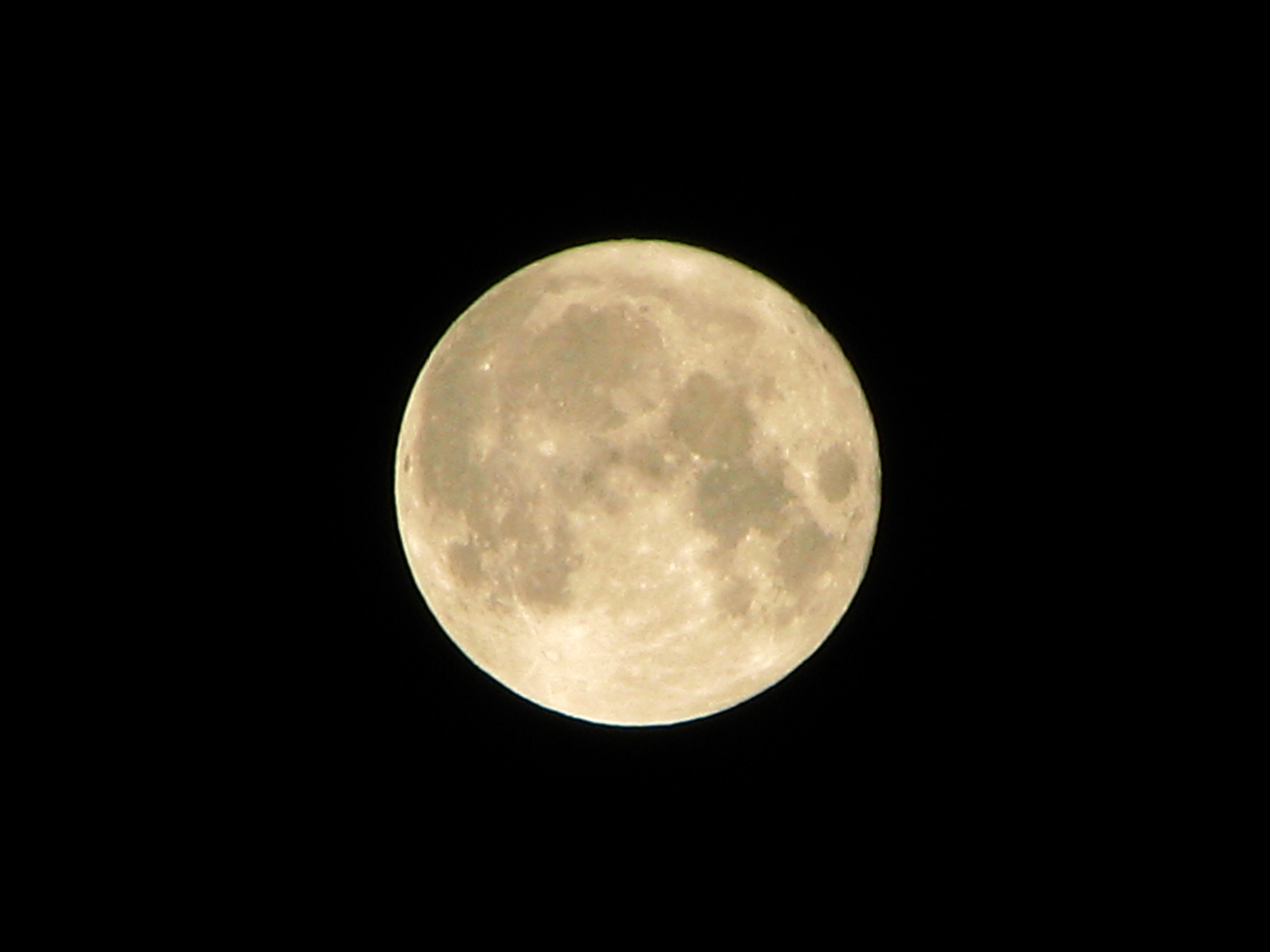
Read: What Is The Name Of The Earth's Moon?


It has many names, depends on who you ask. In English, one name for our moon is simply the Moon.
There are 146 official moons in the Solar System. All official moons have names after gods or Shakespeare characters. Names like Callisto, Titan, or Prometheus. But there’s one moon in the Solar System with a super boring name… the one you’re most familiar with: Moon.

So what’s the Moon’s real name?   The answer is: The Moon. 

For most of human history, there didn't need to be a more specific term to differentiate our moon from other moons that orbit other planets in the solar system, and for good reason: we didn't know there were any other moons.
Until Galileo first turned his telescope to the skies in 1610, and realized that Jupiter had tiny spots of light orbiting around it.

"After other moons were discovered," the NASA site continues, "they were given different names so that people would not confuse them with each other. We call them moons because they orbit planets the same way that the moon orbits around Earth."

Scientists classify the Moon as a natural satellite. Somehow this helps distinguish it from the artificial satellites we’ve been launching for the last 60 years.

In Latin, our satellite's name is "Luna." It’s not an official title or scientific term, but ooh, fancy. Latin.

In Greek, our moon is named "Selene," as is the moon goddess of ancient Greek mythology. The English word "selenology," or the study of the moon's geology, derives from it.

Calling it “the Moon” is kind of boring, but that’s only because scientific discovery has pushed our understanding of the Universe so far out. It’s amazing to think that we’ve discovered so many other moons in the Solar System, and soon, we’ll find them around other stars. 

Comments

Popular posts from this blog

Nutcase Couple Hang From Cliff 2700ft Above Rio

While most people get a little bit worried about heights when climbing up a ladder, Leonardo Edson Pereira, 23, and his girlfriend Victoria Medeiros Nader, 18, are very different. In fact, after seeing images of the couple hanging off a 2,700 ft cliff in Rio, Brazil, it’s safe to say the couple pretty much break the mould when it comes to heights and being daredevils. Pereira took his girlfriend with him on his latest thrill seeking adventure, with Pedra de Gavea their conquest this time. The images really are breathtaking and depict just one of the many times Pereira has climbed the Pedra de Gavea. He claimed: "I love living on the edge! I know people think it’s dangerous and crazy but it makes me feel alive,’ Leonardo says. It is really high and I do just hang on using my arm strength. I have to trust myself not to fall." The literal translation of the rock’s name means ‘Rock of the Topsail’, and while the images certainly are something, given ...

EARTH FACTS

Earth is the third planet from the Sun and is the largest of the terrestrial planets. The Earth is the only planet in our solar system not to be named after a Greek or Roman deity. The Earth was formed approximately 4.54 billion years ago and is the only known planet to support life. Planet Profile Mass: 5,972,190,000,000,000 billion kg Equatorial Diameter: 12,756 km Polar Diameter: 12,714 km Equatorial Circumference: 40,030 km Known Moons: 1 Notable Moons: The Moon Orbit Distance: 149,598,262 km (1 AU) Orbit Period: 365.26 Earth days Surface Temperature: -88 to 58°C Size Of The Earth Compared To The Moon Facts About The Earth The Earth’s rotation is gradually slowing: This deceleration is happening almost imperceptibly, at approximately 17 milliseconds per hundred years, although the rate at which it occurs is not perfectly uniform. This has the effect of lengthening our days, but it happens so slowly that it could be as much as 140 million years before the l...

What Is The Largest Number?

Humans have been using numbers for thousands of years. It is believed that the concept of numbers first originated when prehistoric humans began using their fingers to count. This eventually evolved into sign language and then tally marks on objects like sand, walls and sticks. We’ve come a long way. Now we use calculators and computers to count our large numbers. We even have a word for numbers that are without a limit. Sometimes, it seems like the only people who can make sense of it all are the mathematical savants. One reader wanted to know: What is the largest number in mathematics? NOT SO OBVIOUS So what’s the largest number? The answer should be pretty obvious. Infinity, right? But that’s not entirely correct. Infinity in the strictest sense, is not a number at all. It’s a concept. An idea. And a mind bending one at that. Infinity is a concept which means “a quantity without bound or end”. The definition of infinity in mathematics states that no matter how big a nu...